![National camp action [P]...](https://skitrax.com/wp-content/uploads/2019/08/Duluth-4-2019-08-08-at-10.46.51-AM.png)
![Matt Liebsch on the CXC Elite Team [P] CXC...](https://skitrax.com/wp-content/uploads/2019/08/Matt-Liebsch-CXC.2-525x700.4.jpg)
![Dan LaBlanc [P]...](https://skitrax.com/wp-content/uploads/2019/08/Dan-LaBlanc-img_1855.3.jpg)
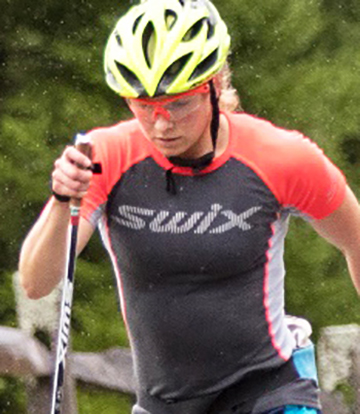
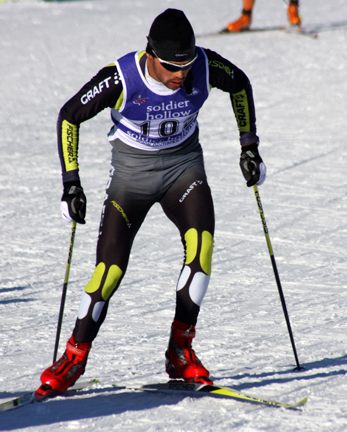 January 2, 2009 – Late in the fall of 2008 Nathan Schultz caught up with Andrew Johnson who was a long-time US Ski Team member, and US Olympian who recently took an assistant coaching position at the University of Utah. Check out “AJ”‘s web site is xccoachaj.com.
How is the transition from full-time athlete to coach and student? What’s the best part, and the worst?
Andrew Johnson: It’s good. It’s nice to be busy. I spent a lot of years spending too much time in hotel rooms. Those were great times but I really like being able to pursue other things now. I left the house at 6am this morning and class got out early tonight so I made it home before 10pm. This might sound a little cliché but it’s pretty sweet to work on something with an athlete and see a positive change in their fitness/technique/etc. I remember as an athlete working with coaches who could explain or demonstrate something in just the right way for me to understand it for the first time…something that I couldn’t pick up from someone else. To occasionally be on the other end of that now is very satisfying. The worst? Well, it’s not too bad but I made more money as an athlete than I do as a college assistant! What frustrates me on a daily basis is that I’m unable to put as much into working with my team as I’d like to. Going to school and making ends meet reduces the amount of time and energy I can devote to the team. I look forward to a time when I can coach full-time.
How is it working for Eli [Brown]? He seems to have a non-standard approach to a lot of things.
AJ: All the coaches that I had a successful relationship with as an athlete could definitely fit into the “unorthodox” category. Eli’s no different. But what he shares with a lot of other great coaches is an unbridled enthusiasm for the sport. I don’t know too many people who think more about skiing on a daily basis than Eli. He keeps things pretty fun and light-hearted…although we come at things from different angles a lot of the time I think our styles complement each other pretty well.
Is it challenging to work under the NCAA bureaucracy, or are there just a few minor hassles?
AJ: It’s no problem at all if you’re happy maintaining the status quo of college skiing. But unfortunately our country is seriously deficient in developing the 18-22 year old skier. The NCAA does a great job of developing athletes in more mainstream American sports but making a college ski team play by rules designed around basketball or football is grossly inadequate. I don’t think we should be depending on NCAA skiing to make our best young skiers better and I hope at some point in the future to help create some better alternatives.
Talk about your private coaching business. Who are your clients and how much are you working with them?
AJ: I do a little. I coach a few masters both online and in person. About the time I started to build the business I decided to go back to school and coach at Utah. I haven’t put much into growing it into anything substantial. I could take on another couple clients but for now it needs to stay pretty small.
Who is going to win NCAA’s, and can you beat them in a face-to-face 10km?
AJ: Don’t have a clue on either count. I did my first race last weekend since the Birkie last year. It went pretty well but I felt positively ill afterwards. I could probably make a decent race of it if we were skating. Maria Grevsgaard might clean my clock in classic. Hopefully I’ll be able to hop into a couple college races this winter so watch the RMISA results!
How much are you training with the athletes and does it help to be able to throw down and humble them a bit by pushing the pace or beating them in a time trial?
AJ: I’m around for most workouts and actually train with them probably two-thirds of the time. Today, however, I was exhausted and hungry so the second half of the workout was spent in the lodge drinking coffee and eating sandwiches.
I think it helps to be able to mix it up with them. Going hard in intervals or a time trial gives me great insight into how fast they are going. So much of coaching and monitoring athlete progress is subjective and I get a good feel for it by skiing with the group. Unless they’re doing anything short and fast in which case this old man doesn’t have a chance.
Are you working a lot with all the athletes on the team, or just a select group?
AJ: I try to work with the whole team. Because I still like to train some I end up doing most of our workouts with the guys. We’re fortunate to have Wendy Wagner as a volunteer coach and she trains with the girls when she can. But for technique and planning training I try to be involved with everyone. Obviously on race day I help wax and test skis with anyone who needs help. I’m still trying to get to know everyone on the team in terms of how I can best help them. I understand now that there were definitely times as an athlete when I must have been a complete pain in the ass to work with.
Thanks Andrew, all the best
AJ: Thank you.

- News
- BLOGS
- Adele Espy
- Alberta World Cup
- Alex Harvey
- Cailtlin Compton
- Craftsbury Green Racing Project
- Devon Kershaw
- Drew Goldsack
- Haley Johnson
- Holly Brooks
- James Southam
- Jessie Diggins
- Johnny Spillane
- Kikkan Randall
- Liz Stephen
- Lowell Bailey
- Perianne Jones
- Reese Hanneman
- Sadie Bjornsen
- Stefan Kuhn
- Tim Burke
- Torin Koos
- Videos
- Destinations
- Interviews
- Calendars
- Galleries
- Gear
- Racing
