![National camp action [P]...](https://skitrax.com/wp-content/uploads/2019/08/Duluth-4-2019-08-08-at-10.46.51-AM.png)
![Matt Liebsch on the CXC Elite Team [P] CXC...](https://skitrax.com/wp-content/uploads/2019/08/Matt-Liebsch-CXC.2-525x700.4.jpg)
![Dan LaBlanc [P]...](https://skitrax.com/wp-content/uploads/2019/08/Dan-LaBlanc-img_1855.3.jpg)

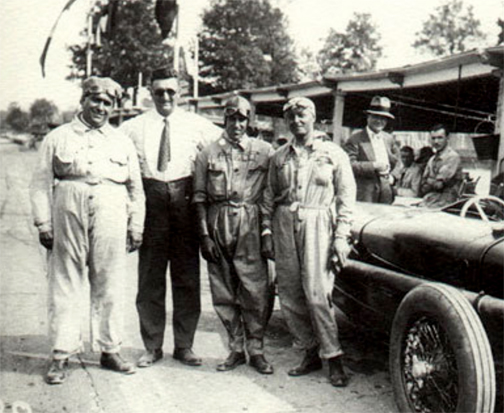
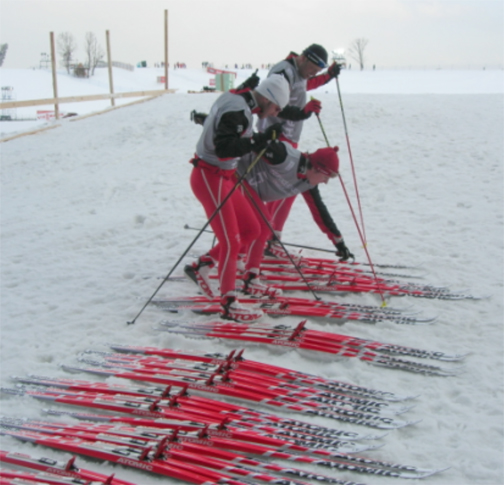
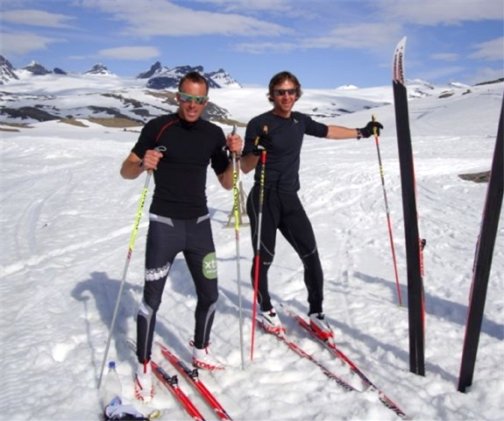
 November 1, 2009 – There is an eternal conflict shared by car, bike and ski companies. At what point do you unleash a new design to the public? How much testing, how many races, does a ski or a bike or a car need to undertake before it’s ready for market? The Italian car manufacturer Alfa Romeo had a race director named Enzo Ferrari who left Alfa and started his own company over this very issue. Atomic has Roman Toferer and they don’t want him starting his own company over an argument about development.
Any manufacturer can have the fastest and most stable racing ski ever designed. But the second it goes into production, that company needs to test new flex patterns, new sidecuts and new base materials or it will be left behind by the competition. Let’s say a company comes out with a new sidecut that proves to be quite the weapon in early spring snow. They give test skis with that sidecut to some top athletes who try them on summer glaciers (warm and wet) or they take the skis to New Zealand (cold and dry). The testers rave about the new design and insist that the company should go into full production with the new sidecut.
This now becomes the new race ski for that company and it’s what master and junior skiers in North America and Europe will hopefully buy in the following year. The only problem is that it was never properly tested in firm track conditions and this new and very expensive race ski is about as stable as a Yugo with bald tires on an icy road. No big deal for that company’s race department, they just whip up a batch of the old skis, give them the new graphics and hand them off to their sponsored racers. It is the average skier in Oslo, Minneapolis or Nagano who pays the price for inadequate testing.
All companies have been guilty of something similar to the above scenario at one time or another. It’s Toferer’s job to make sure Atomic does nothing like that on his watch. What’s the right time frame for testing, developing and then releasing a new design? Go too long and you are denying a winning tool to the racers and consumers. Let it out too early and thousands of skiers might buy something that turns into a disappointment. There are no clear parameters to tell a race director when a ski is ready. Instead, it is up to his gut instincts to know if he has developed a winner.
Rick Halling, of Atomic Ski USA, discussed this development with Toferer and tried to learn more about what goes into a racing ski:
What is the first step in testing a new sidecut or core material? Are there tests you can do in the factory without even going onto the snow?
Roman Toferer: At first you always start with an idea you get during testing or skiing together with athletes or team service people just for fun. Mostly it goes into a first discussion to make sure if there’s even a chance to manufacture and produce the idea.
Sure there are a lot of tests necessary to analyze materials and other things which are necessary to make a good ski. Finally laboratory knowledge is a good thing to be familiar with.
So let’s say you have a new sidecut that you think is going to be a winner. Do you and your staff test it first on snow before you give it to athletes for testing?
RT: Of course developing process means:
– idea
– material analyses
– molding
– prototyping
– laboratory test of proto
– first on snow test intern
– first test with very few people able to feel differences in workout (service technicians or athletes)
– long term testing(100% WC proven)
– ready to present
If the new sidecut has proven to be something you and your testers feel is an improvement which athletes do you like to work with and what national teams do you like for testing?
RT: We have to provide the best skis world wide so we have to use a lot of different testers in different snow conditions. Snow in Whistler is different than snow in Siberia for example so we need to be clear about that as well. But we can say team Norway and U.S. are the most useable in this case.
Looking at Atomic’s top World Cup racers. Frode Andresen pushing 190 pounds is a big guy by elite racing standards while Andrea Henkel is all of 5’2” and 105 pounds. Do you try to get input from all of our racers of every size on how they feel about a new design?
RT: Sure you cannot use same adjustment for different lengths and weights that’s clear. If you have good design for a skate ski, you can not just make some 184s and give them to Claudia Nystad or Lindsey Dehlin and say they are the testers. I have to make some 178s for Riita Liisa Roponen and Andrea Henkel and I have to make some 190s for Todd Lodwick, Billy Demong and Frode Andresen. It is so important to test with all sizes of skiers.
How about snow conditions? How do you make sure a new sidecut or laminate will work well in all conditions and not just the Dachstein glacier in spring.
RT: That explains the long term period of testing (100% World Cup proven) which means the skis have to be proven everywhere thru out almost an entire World Cup season. That’s why we’ve been travelling to British Columbia and other continents the last few years. We test the whole globe. That’s what must be done before a ski go to ski stores.
And durability? The current World Cup skis have laminates that are new from what was used two years ago. How do you make sure a new material is durable without taking two or three years of constant use?
RT: Laboratory tests of materials, you can simulate a lot.
Combat tested? Are you reluctant to move forward with a design until it has proven success on the World Cup?
RT: Sometimes you have to trust in what you’re doing – no risk, no fun. We would never begin mass production of a design if it has not won medals at the World Cup.
Billy Demong, Todd Lodwick, Giorgio DiCenta, Andrea Henkel and Riita-Liisa Roponen had some of the best races of their lives last winter on the new Featherlight. When did you produce the first prototype with this technology?
RT: Really the first proto on snow was at Sognefjell almost 10 months ahead of Liberec, so this was a fast one.
What are some of the changes you have made to the Featherlight since you first introduced as a prototype?
RT: This we keep as a secret.
Let’s be honest, in the days before you or your predecessor Peter Juric came on board, Atomic produced some race skis that definitely would not meet our current standards. What are you doing differently in regards to testing and development as opposed to 10 years ago?
RT: Everything moved into teamwork between people where everyone is a skier by themselves or at least has been a skier at a high level. The communication and the use of athletes have been demonstrating that this is the right way to go. Every one has his/her part to fulfill when it comes to the developmental process which I think is the goal for our great products. Results have been showing it’s not that necessary to have such big racing team.
That translates as a nice way of saying that the new staff is made up of engineers with an elite racing background and you do a better job now of communicating with the athletes.
RT: Genau. Exactly.
Can you truthfully say that when a consumer walks into a shop and buys a race ski made by Atomic that it has been tested more than any other race ski on the market?
RT: Regarding race skis, well I would say that is very possible.

- News
- BLOGS
- Adele Espy
- Alberta World Cup
- Alex Harvey
- Cailtlin Compton
- Craftsbury Green Racing Project
- Devon Kershaw
- Drew Goldsack
- Haley Johnson
- Holly Brooks
- James Southam
- Jessie Diggins
- Johnny Spillane
- Kikkan Randall
- Liz Stephen
- Lowell Bailey
- Perianne Jones
- Reese Hanneman
- Sadie Bjornsen
- Stefan Kuhn
- Tim Burke
- Torin Koos
- Videos
- Destinations
- Interviews
- Calendars
- Galleries
- Gear
- Racing
