


![National camp action [P]...](https://skitrax.com/wp-content/uploads/2019/08/Duluth-4-2019-08-08-at-10.46.51-AM.png)
![Matt Liebsch on the CXC Elite Team [P] CXC...](https://skitrax.com/wp-content/uploads/2019/08/Matt-Liebsch-CXC.2-525x700.4.jpg)
![Dan LaBlanc [P]...](https://skitrax.com/wp-content/uploads/2019/08/Dan-LaBlanc-img_1855.3.jpg)
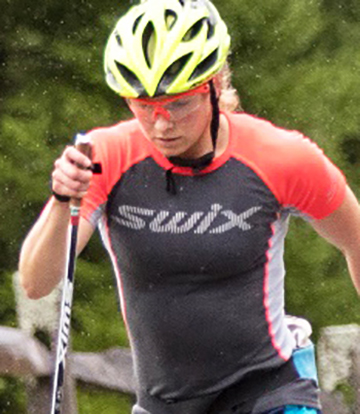
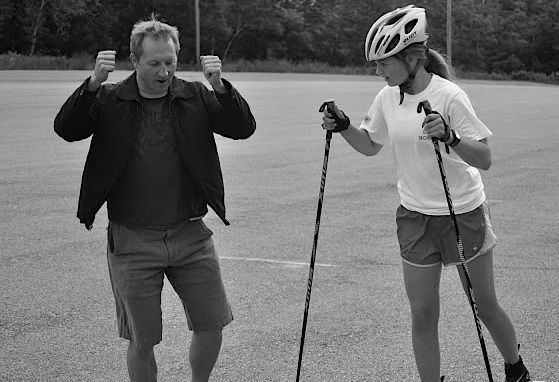
July 29, 2013 – Every year, US Ski Team Development Coach Bryan Fish relies on the NNF to support development funding. As a result, Fish is one of the most active participants in the NNF program submitting endless photos from camps and insights from his trips on the road and supporting our program and fundraising initiatives. We ask him 10 questions pertaining to skiing development.
What is the mission of the USST development program?
Bryan Fish: Our mission is to provide a clear pathway that advances from youth to best in the World.This is executed by providing age-appropriate camp and competition opportunities that allow the athletes to gain experience, develop skills and thrive at each step.
What’s the best part of working with these athletes?
BF: These athletes are both talented and motivated. Their motivation is contagious to all involved, most important; it is contagious to one another. This positive energy is further fueled by the recent success of the U.S. Ski Team. Our developing athletes have American skiers displaying how to become best in the world. They can truly “see” that possibility can indeed become reality.
What expenses are considered “development” expenses?
BF: “Development” is open-ended. We strategically target the key national preparation camps and international competitions that are direct steps in our pathway OR what we call our “Cross Country Development Pipeline.”
What percentage of those expenses are now covered by the NNF?
BF: The National Nordic Foundation covered 33% of all costs in the 2012-13 season. This included the total expenses of international development competitions and the two national development preparation camps (NEG and NTG). This has been huge when we’re starting at a budget of nil. For example, NNF funding has cut cost for projects like Junior World Ski Championships in half.
The impact this has had on development in our country has been significant. We have more development preparation camps and international development competitions than we have ever had in the past. We had 56 athletes participate in the International Development Competitions and 20 of these athletes participated in more than one of the trips. That was 240 international development race starts in the 2012-13 ski season. The support from NNF has been instrumental. The support that NNF has provided has made the trips financially feasible for our developing athletes.
Each year NNF has stepped up their funding: not only in supporting projects that have long been a part of our pipeline but also supporting the new projects that fill in the gaps of our pipeline. An example of this is the newly added Norwegian Junior National trip.
How do you feel development has grown or changed in the US in the last five years?
BF: I feel we are moving toward common goals with a common message. I feel we are more united as a ski community than in the past.
Strong partnerships continue to grow and strengthen throughout our Cross Country community.
There are more opportunities than ever – more camps and competitions. I feel we have reached a good balance between training day-to-day with the local programs and the pipeline projects (regional, national and international camps and competitions).
This balance is further aided with the group effort at the national pipeline camps and competitions. Projects like Regional Elite Group camps, U16 National Camp (J2 National Camp), Norwegian Junior National trip and U18 Nordic Junior Competitions are guided and led by our club and regional coaches. US Ski Team staff support many of these projects. However, it is our club coaches that provide the leadership to these projects. National camps and international trips like Junior World Ski Championships, OPA Cup, National Training Group (NTG) and National Elite Group (NEG) are led by USST staff and supported by club and regional coaches. These partnerships allow for ideas to be shared. This continues to strengthen our pursuit toward common goals. It cultivates a true national “TEAM” identity.
Our developing athletes and coaches are gaining more experience that can in turn be brought back to their local programs. I feel we are doing a better job developing American coaches from American programs.
What about the US development system do you feel could still be improved?
BF: It is amazing to think that we were 6th on the Nation’s Cup standing last season. We were 15th on the Nation’s Cup standing in 2009. We have witnessed exciting growth in national performance at the elite level. We have yet to achieve consistent top ten results at the Junior World and World Under-23 Championship level. That is a target worth continuing to strive for. We are putting the development pieces in place thanks to our partner programs, regions and the support of NNF.
Maintaining and sustaining this momentum will take further effort. We need to capitalize on our recent successes and continue to develop athletes, coaches and programs so this continues into the future. We had great success back in the late 70’s and early 80’s but our results then declined.
How might we learn from the past?
How do we keep the motivation high, so this success is sustainable?
How might we then continue forward and break into the top 5 on the Nation’s Cup standing?
I feel we need to continue to maintain and improve our key partnerships. We need to continue to strive for common goals that benefit all involved. Then, we need to provide the tools and skills to communities that have the potential and desire for strong cross country programming, but haven’t yet developed a local club program.
What are the biggest challenges in making those improvements?
BF: Cross Country is an individual sport, yet it takes teamwork to achieve our goals. Working together takes communication and hard work, but it works. NNF is a perfect example of an organization that is successfully aligning the cross country community towards a common goal. How can we focus on our personal strengths and divide and conquer?
We need to maintain a broad vision. We also need to maintain a mindset that is outwardly focused on the whole ski community and not just self.
We need to capitalize on our successes that already exist. We need to stick to the basic formula and execute well. The process is working, so we need to keep looking at how we can continue to best execute the plan.
Who are your heroes in coaching (especially in program development)?
BF: I like to read about John Wooden, Phil Jackson and Vince Lombardi. They all possessed timeless traits that transformed their programs.
That being said, I don’t think we need to look far to display examples of excellence.
I respect the coaches, coordinators and directors that are working diligently every day evolving our XC ski community that is uniquely American. I also thank the USST athletes that are on the front lines making history. They are our best teachers demonstrating the path to take and how to achieve excellence in an ethical manner. They are role models worthy of our future athletes to follow.
Where would you like to see the US development programming in 5 years?
BF: I’d like to see sustained success in our sport at every level and an increase in grass root programs that foster a long term athletic endurance lifestyle. I’d like to see an increase in programs that are developing endurance athletes that are truly enjoying skiing – having fun and skiing fast.
What’s your favorite part of your job?
BF: Traveling around the world to notorious ski venues is definitely a perk of the job. My position is diverse. It allows me to work with many athletes and coaches at all different ages and levels. Working on updating the USSA cross country skiing educational materials has also become a greater commitment.